Hospitalist Scheduling Is Harder Than It Looks

The hard part is not filling the grid. The hard part is making the grid fair enough, clear enough, and flexible enough that people can stop fighting with it.

Product Direction

Hospitalist scheduling breaks down when too much logic lives in one person’s memory. Clinical Rota is meant to make more of that logic visible.

The Problem Is Not The Grid

Hospitalist scheduling looks simple from far away. It is not. The hard part is not filling the shifts. The hard part is deciding who gets the unpleasant shifts, who covers which service, and how much disruption the group is willing to tolerate in the name of fairness.

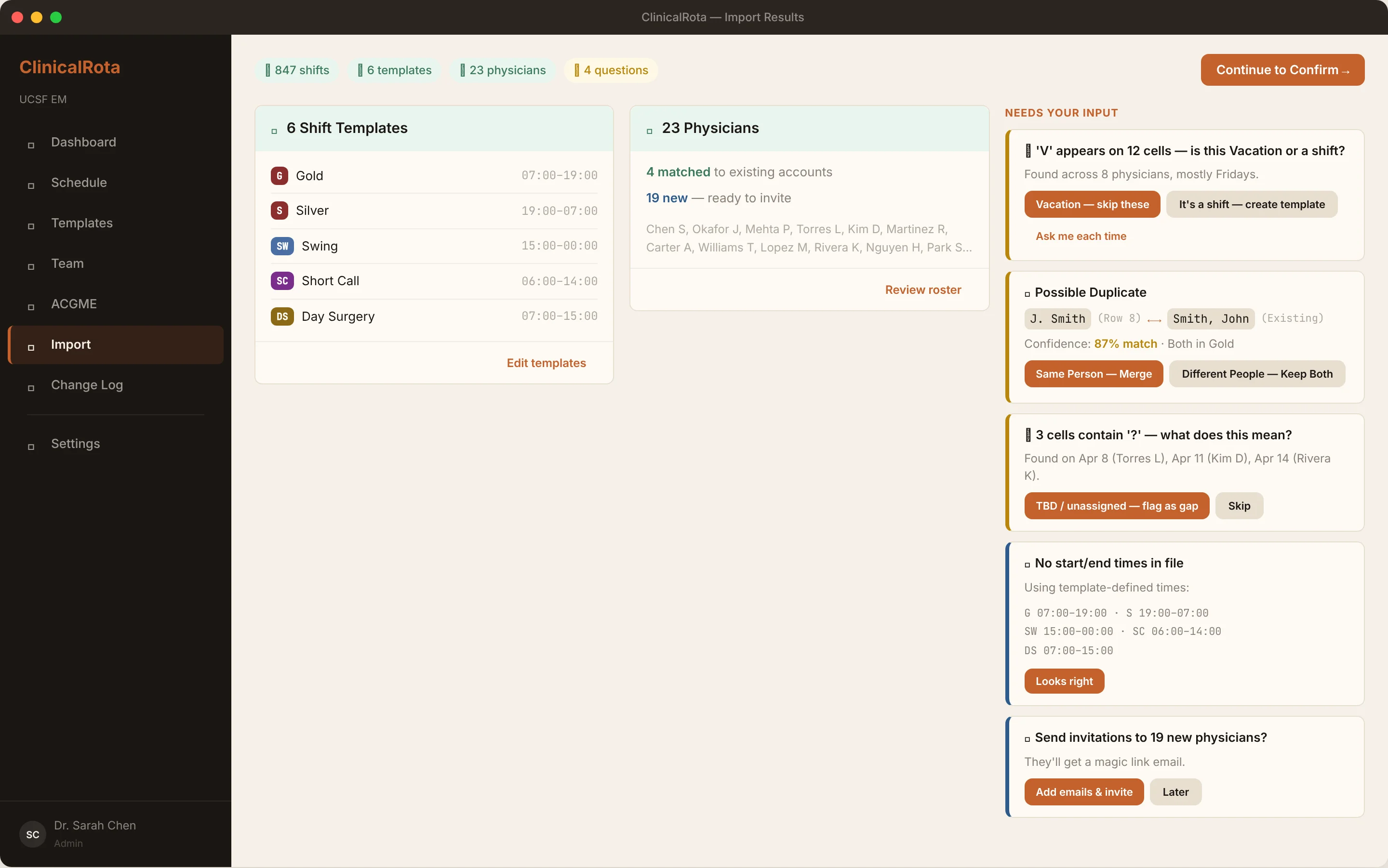
A lot of schedule tension comes from the fact that nobody can see the whole picture. Each physician sees their own nights, their own weekends, their own bad month. The scheduler sees the tradeoffs. The product question is how to make more of that logic visible without turning the schedule into a spreadsheet with better colors.
The Problem Is Not The Grid

Continuity And Fairness Usually Fight Each Other

The schedule that looks fairest on paper is not always the schedule that feels best on the floor. Continuity pulls in one direction. Even distribution pulls in another. Small personal constraints pull in a third.

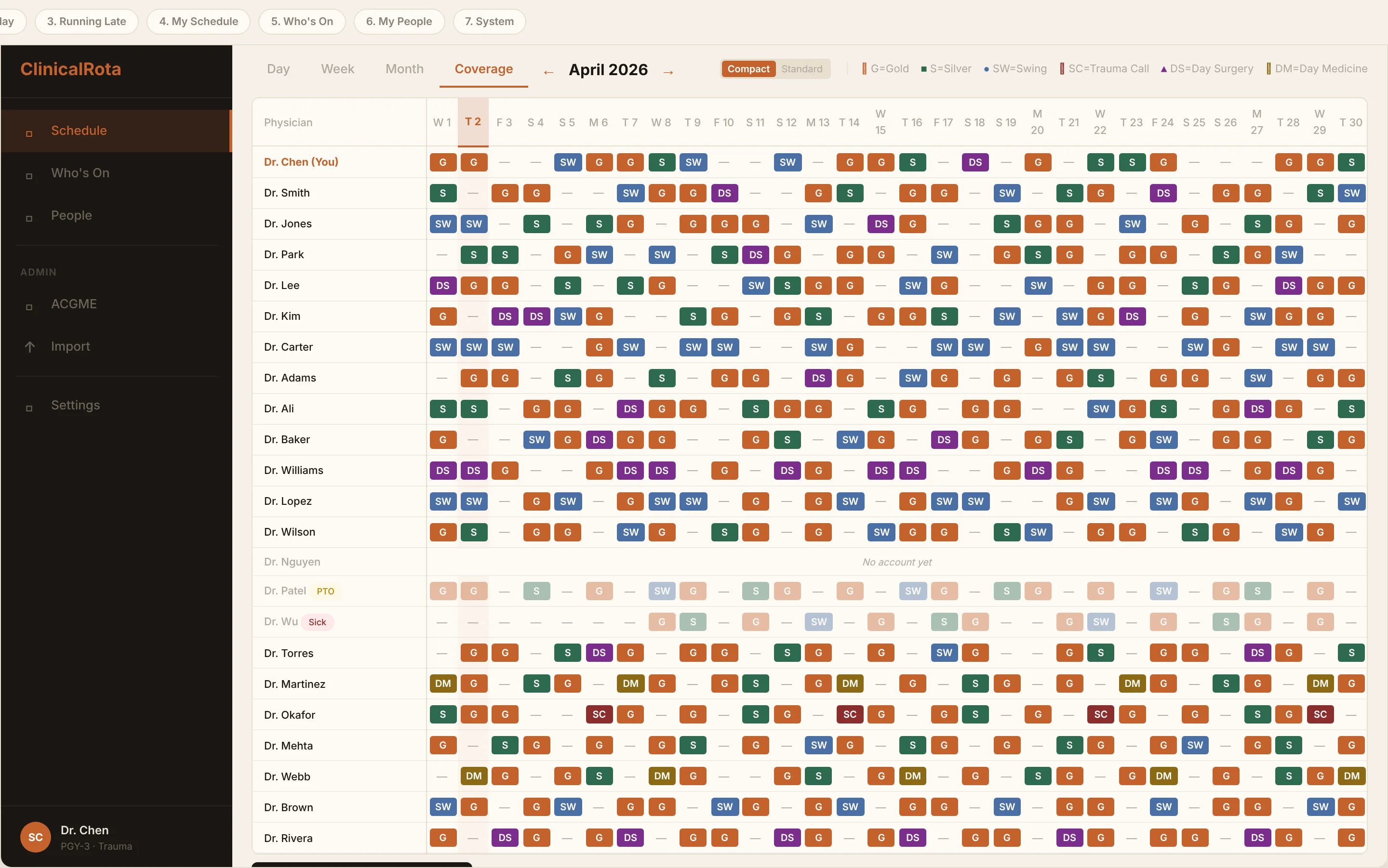
That is why a better scheduling product probably starts as a better way to see tradeoffs. It should be obvious when a change improves continuity but makes weekends lopsided. It should be obvious when a fair month creates a rough week for one person. If the product cannot show the tradeoff, it cannot really help make the decision.

Continuity And Fairness Usually Fight Each Other

The Scheduler Should Not Have To Be A Hero

Every group has one person who somehow keeps the schedule alive. That is usually a sign that the system is too brittle, not that the scheduler is unusually good.

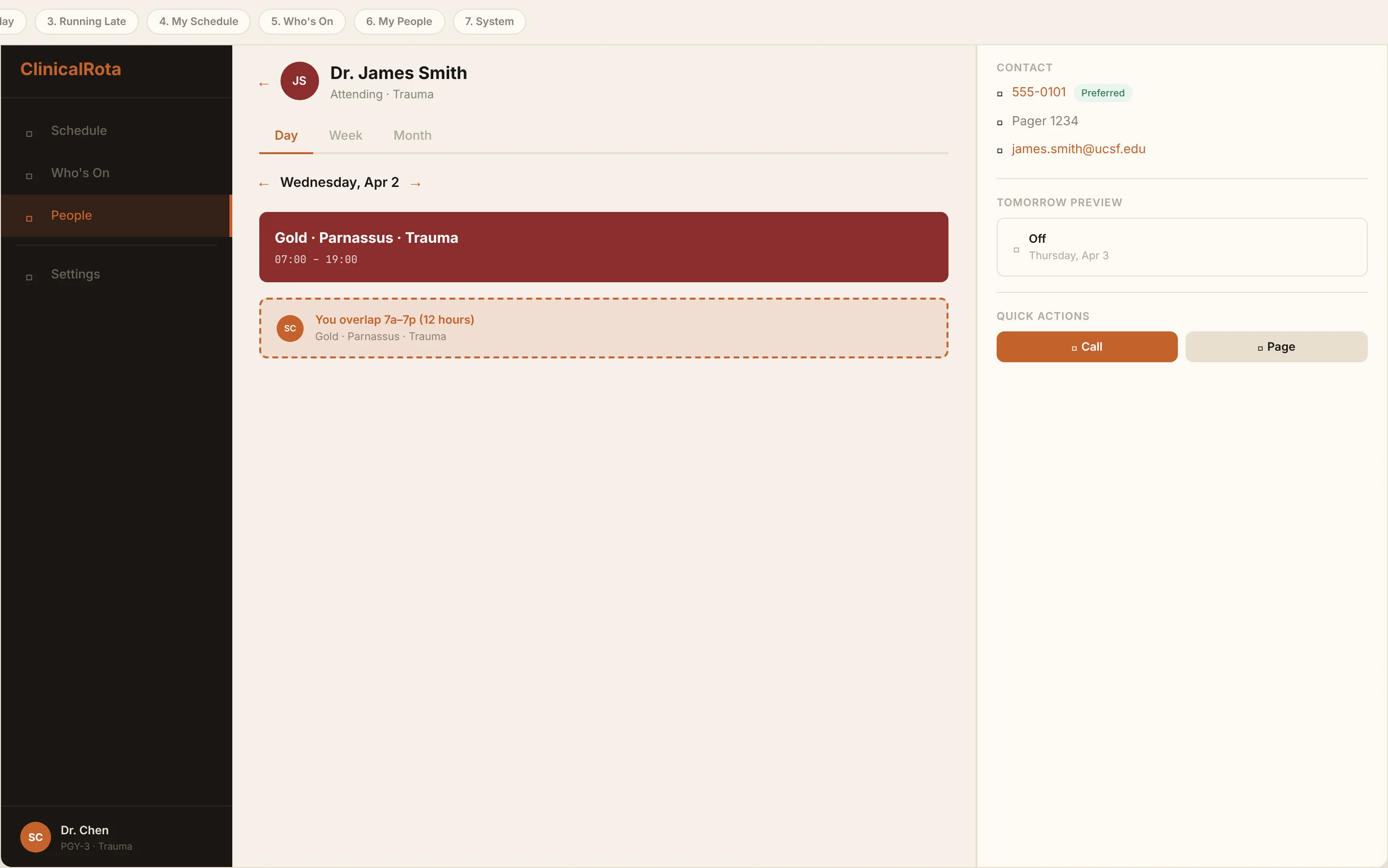
The first version of a useful tool here may not be an automatic schedule generator. It may just be a better viewing layer: clearer distribution, cleaner change history, easier contact lookup, less time reconstructing what changed and why. If that layer is good, the later automation has something solid to stand on.

The Scheduler Should Not Have To Be A Hero

What We Would Want To Build First

The useful question is not whether one tool magically solves hospitalist scheduling. It is what the first real version should do well.

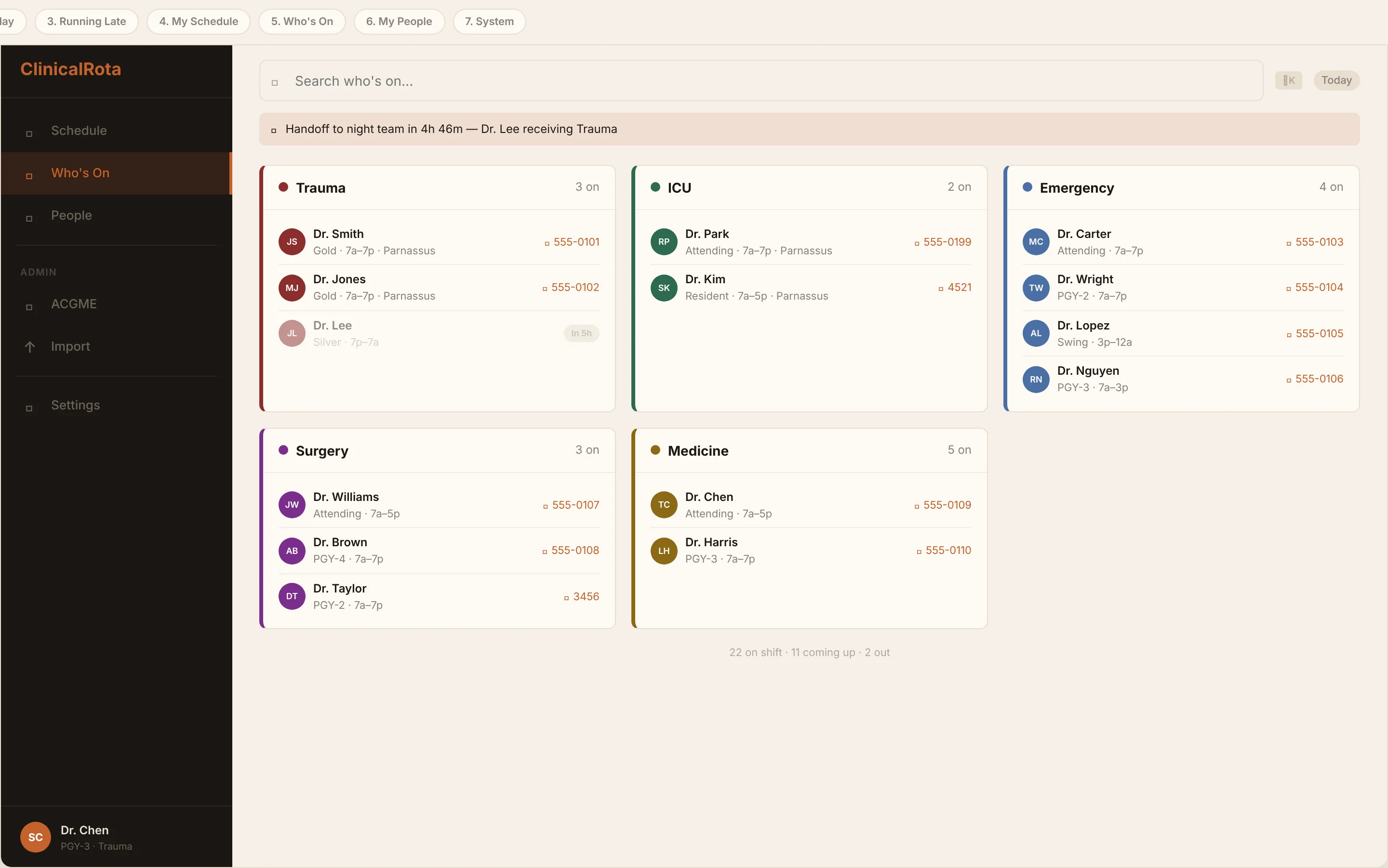
My guess is that it starts with clarity. A daily view physicians would actually open. A department view that makes distribution legible. A faster way to answer who is on, who can cover, and what changed. If that matches the pain in your group, the demo call is useful. If it does not, that is useful too.

What We Would Want To Build First

What We'd Want To Build

Product ideas shaped around Hospitalists

Shift Distribution You Can See

Nights, weekends, and holidays should be legible, not arguable.

Continuity Without Guesswork

The schedule should make patient handoffs and service blocks easier to understand.

Backup Coverage Visibility

When someone calls out, the replacement question should not start with a group text.

Multi-Site Awareness

If your group covers more than one unit or hospital, the view should reflect that directly.

Transparent Rules

People trust schedules more when the logic is visible.

A Better Viewing Layer

Even before generation, the schedule itself should be easier to read and reason about.

Want to talk through this workflow?

Clinical Rota is the direction we want to build. The demo is a chance to pressure-test it against your real workflow and decide what the first version should do.

Book a Demo