ED Scheduling Breaks Faster Than Most Scheduling

In the emergency department, a bad schedule is not a problem for next month. It becomes a problem in the next few hours.

Product Direction

ED scheduling is less about publishing a calendar than about staying upright when the day changes shape.

The ED Has Almost No Margin For Error

Emergency department scheduling is a different class of problem. A weak inpatient schedule can limp for a while. A weak ED schedule announces itself immediately.

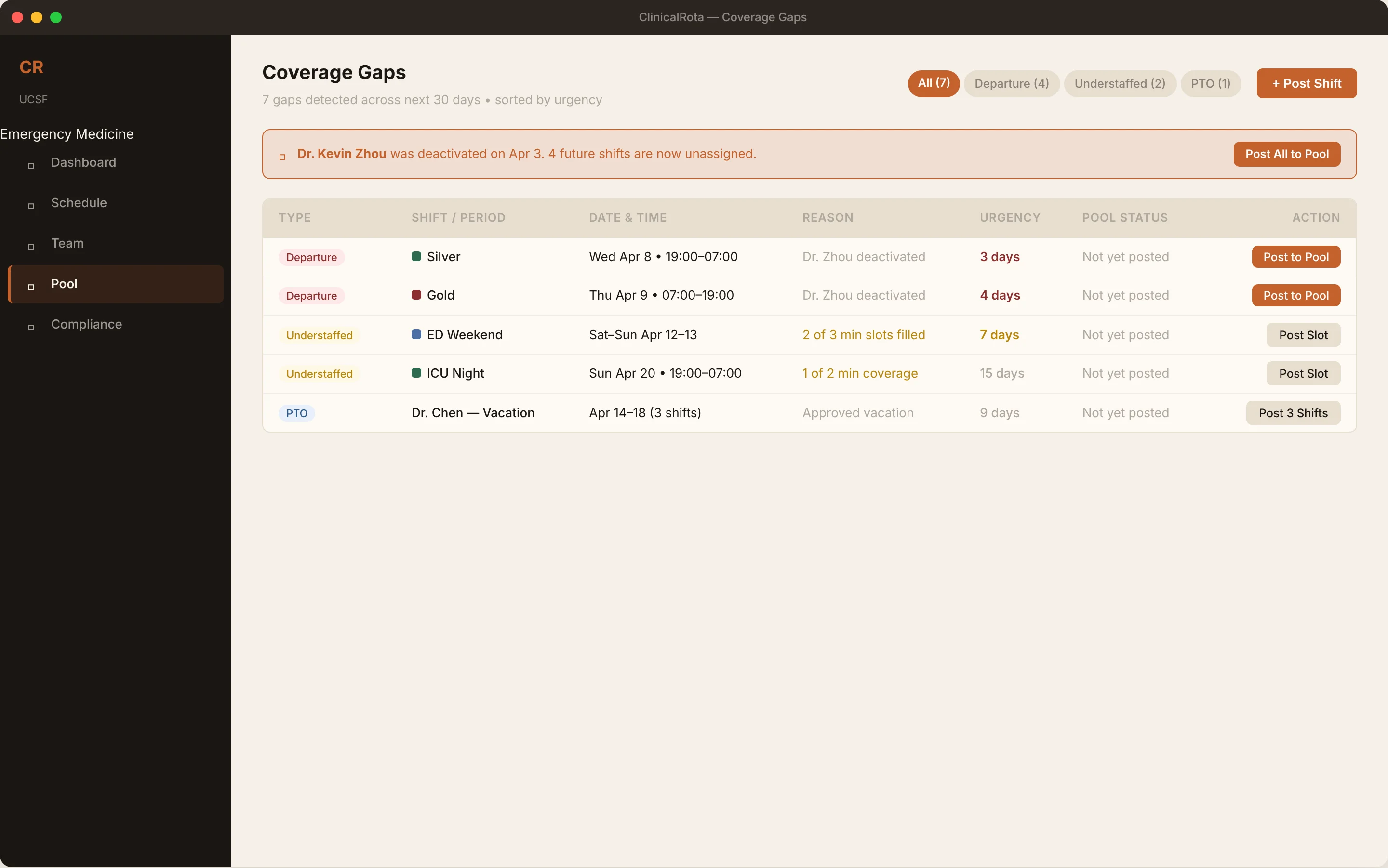
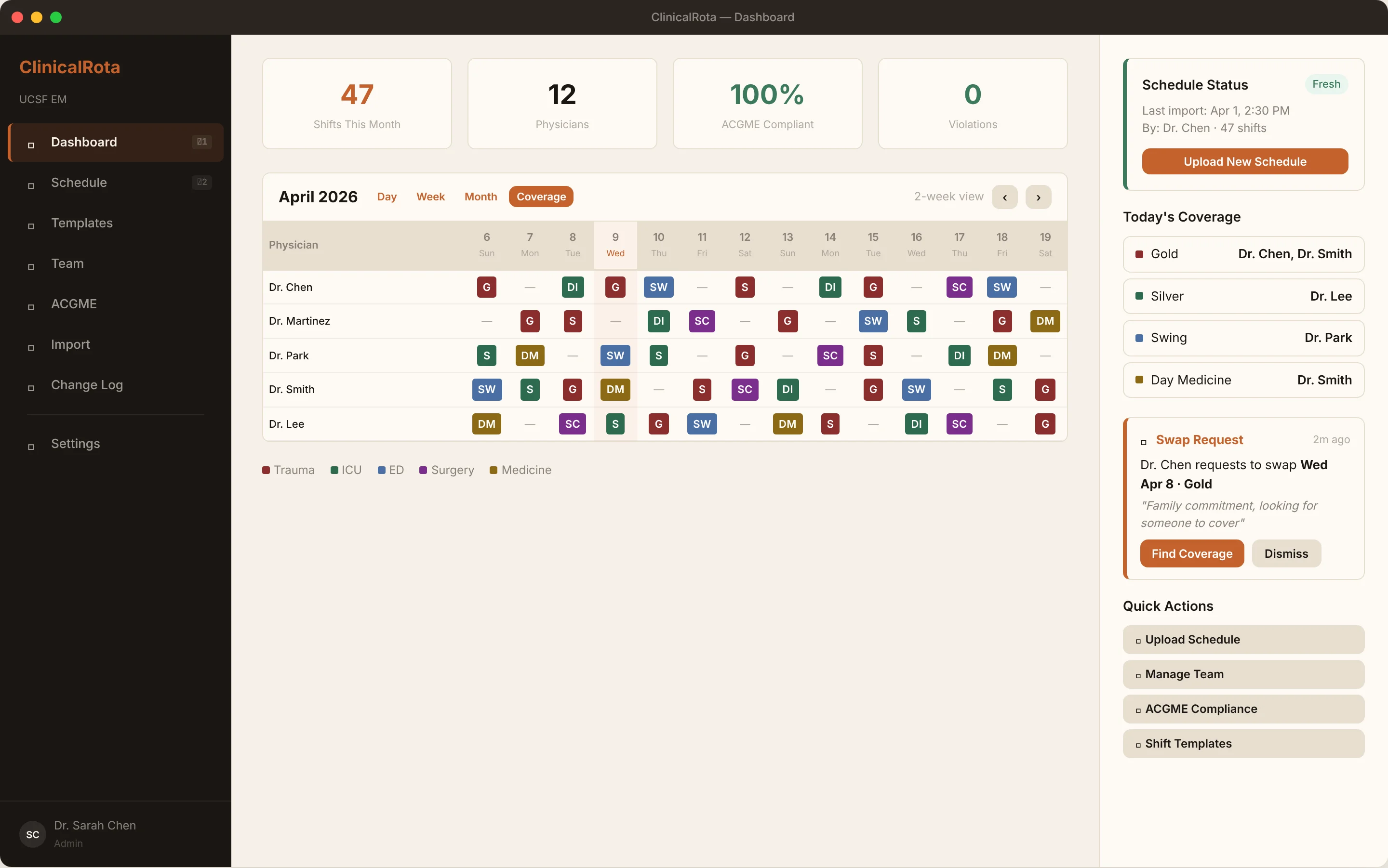
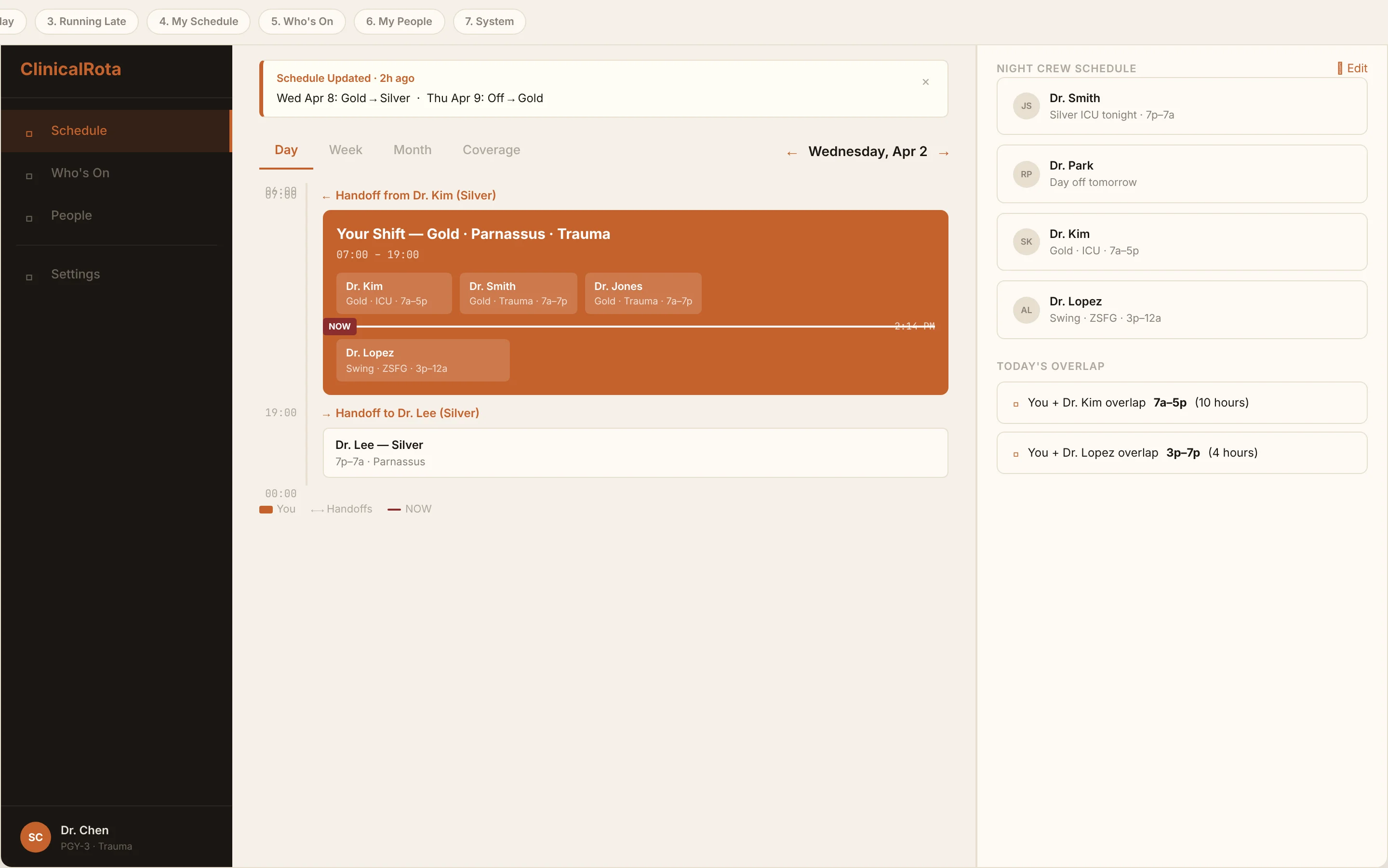
That changes what matters in the product. It is not enough to publish a monthly calendar. The useful thing is the layer underneath it: who is on now, who can replace them, where the handoff points are, and which parts of the week are one call-out away from trouble.
The ED Has Almost No Margin For Error

Fatigue Is Part Of The Scheduling Problem

A lot of healthcare software pretends fatigue is just another rule. It is not. In the ED, fatigue changes performance, patience, and handoff quality.

That does not mean a product should pretend to solve burnout with an algorithm. It means the schedule should make fatigue tradeoffs easier to see. Back-to-back nights should look expensive. Thin overnight coverage should look fragile. Right now those judgments often live in the head of the scheduler.

Fatigue Is Part Of The Scheduling Problem

Change Handling Matters More Than Perfect Planning

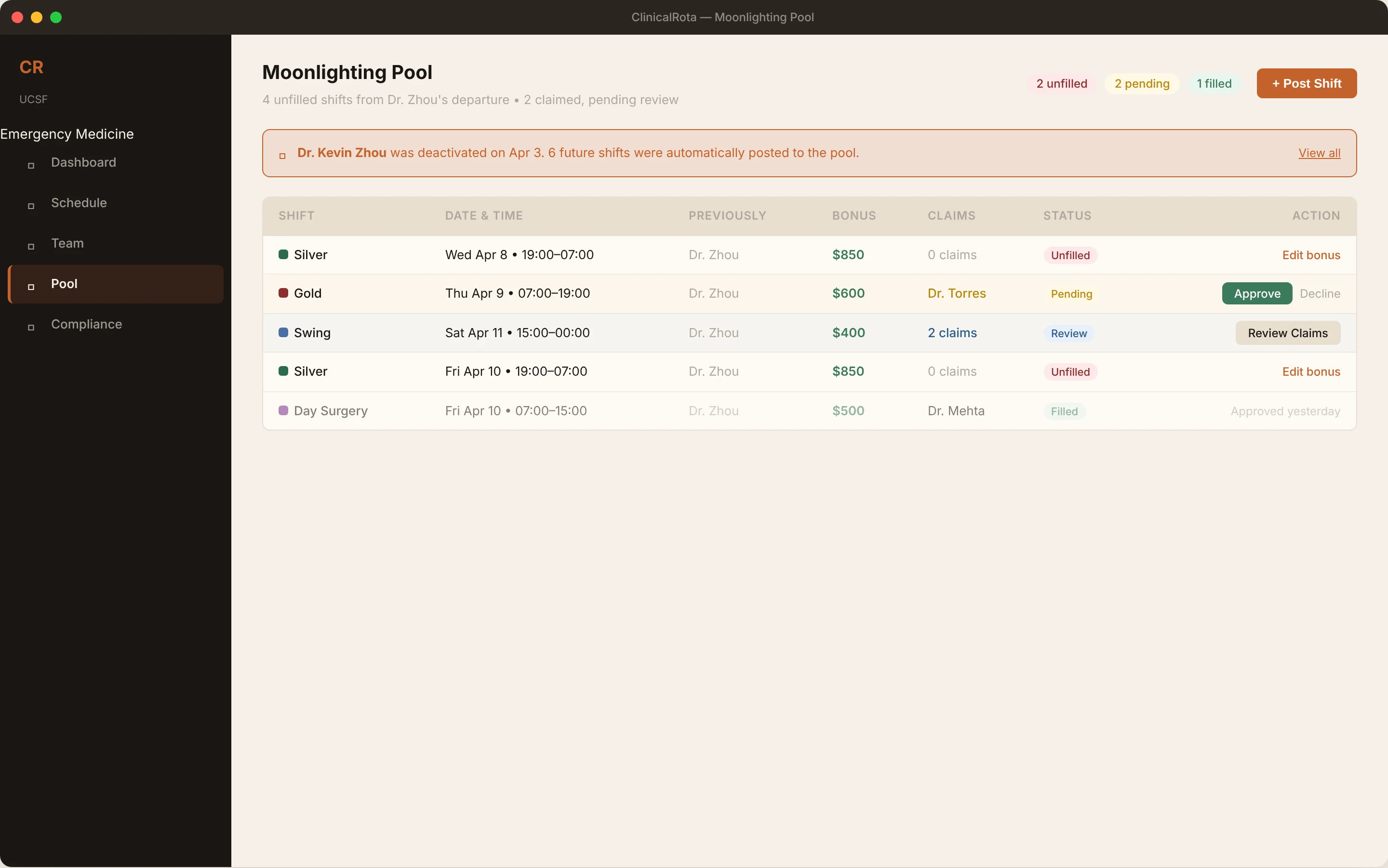
The schedule that works on Monday at noon is rarely the same schedule you need on Thursday at two in the morning. ED operations are full of abrupt change. The product has to respect that.

So the interesting question is not whether software can generate a beautiful monthly plan. The interesting question is whether it helps the department recover when the plan stops matching reality.

Change Handling Matters More Than Perfect Planning

What We Would Want To Build First

The useful test is whether this direction asks the right questions.

For the ED, those questions are usually about visibility and speed. Can you see fragile shifts? Can you see the handoff shape of the day? Can you see who is qualified, available, and already carrying the hard assignments? If those are the real pain points in your department, this is the right direction to explore.

What We Would Want To Build First

What We'd Want To Build

Product ideas shaped around ED Directors

Coverage You Can See

Who is on, who is next, and where the fragile points are.

Fatigue Rules That Are Visible

Rest constraints matter more when the department never closes.

Handoff Awareness

The shift boundary is part of the job, not a clerical detail.

Backup Logic

When the plan breaks, the next move should be easier to see.

Multi-Site Context

If coverage spans sites, the schedule should show the whole system.

Fewer Hidden Tradeoffs

Better tools make the compromises obvious before they become political.

Want to talk through this workflow?

Clinical Rota is the direction we want to build. The demo is a chance to pressure-test it against your real workflow and decide what the first version should do.

Book a Demo