Articles
Short essays on healthcare scheduling, why current tools feel broken, and what a better product might look like.
Nocturnist Scheduling: Managing the Night Hospitalist Coverage Problem
Night hospitalist coverage is a different system, not just the day schedule with fewer people.
Read more →Pediatric Scheduling: How Children's Hospitals and Peds Units Staff Differently
Pediatric scheduling gets harder when coverage depends on small pools, seasonality, and July turnover.
Read more →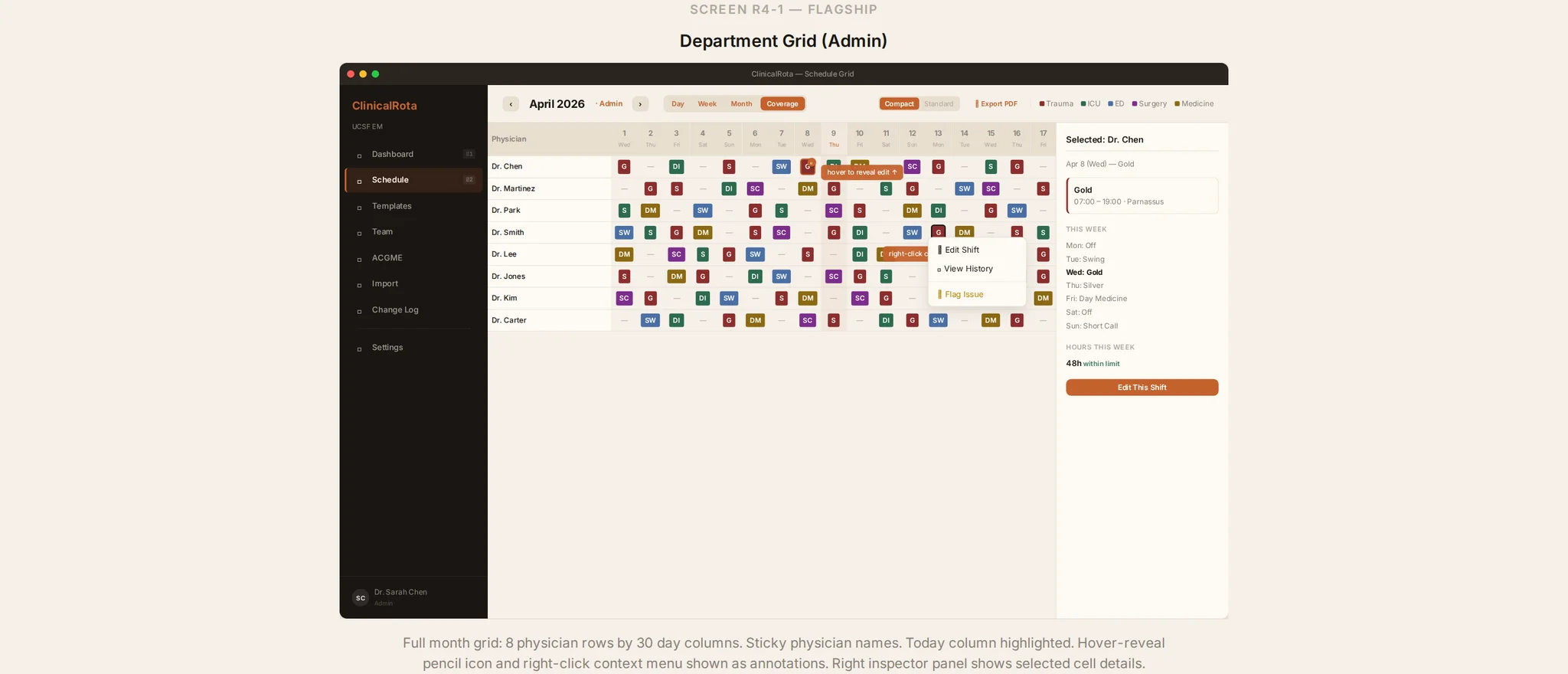
Labor and Delivery Scheduling: Managing Unpredictable Volume in Obstetrics
Labor and delivery scheduling breaks ordinary staffing assumptions because volume arrives when it wants to.
Read more →ICU Scheduling: Why Critical Care Units Need a Different Scheduling Model
ICU scheduling is not just shift coverage. It is how a unit decides who can safely absorb the next bad hour.
Read more →Surgical Scheduling and the OR Block Problem: Why Perioperative Staffing Never Stays Fixed
OR scheduling is one of the clearest examples of why a grid is not a workflow.
Read more →Emergency Department Scheduling: Why the ED Is the Hardest Unit to Schedule
The ED is unusually hard to schedule because the cost of a bad schedule shows up immediately.
Read more →Float Pool Scheduling: Managing Per Diem and Agency Staff Without Losing Track
Float pools are not spare parts. They are how hospitals absorb uncertainty.
Read more →Duty Hours Are Mostly a Visibility Problem
Duty-hour compliance looks like a rules problem. It is mostly a visibility problem.
Read more →What Good On-Call Scheduling Looks Like
Good on-call scheduling is mostly about making the rules explicit before the schedule gets stressful.
Read more →What Existing Scheduling Tools Optimize For
Most comparisons focus on features. The better question is what job each tool was built to do.
Read more →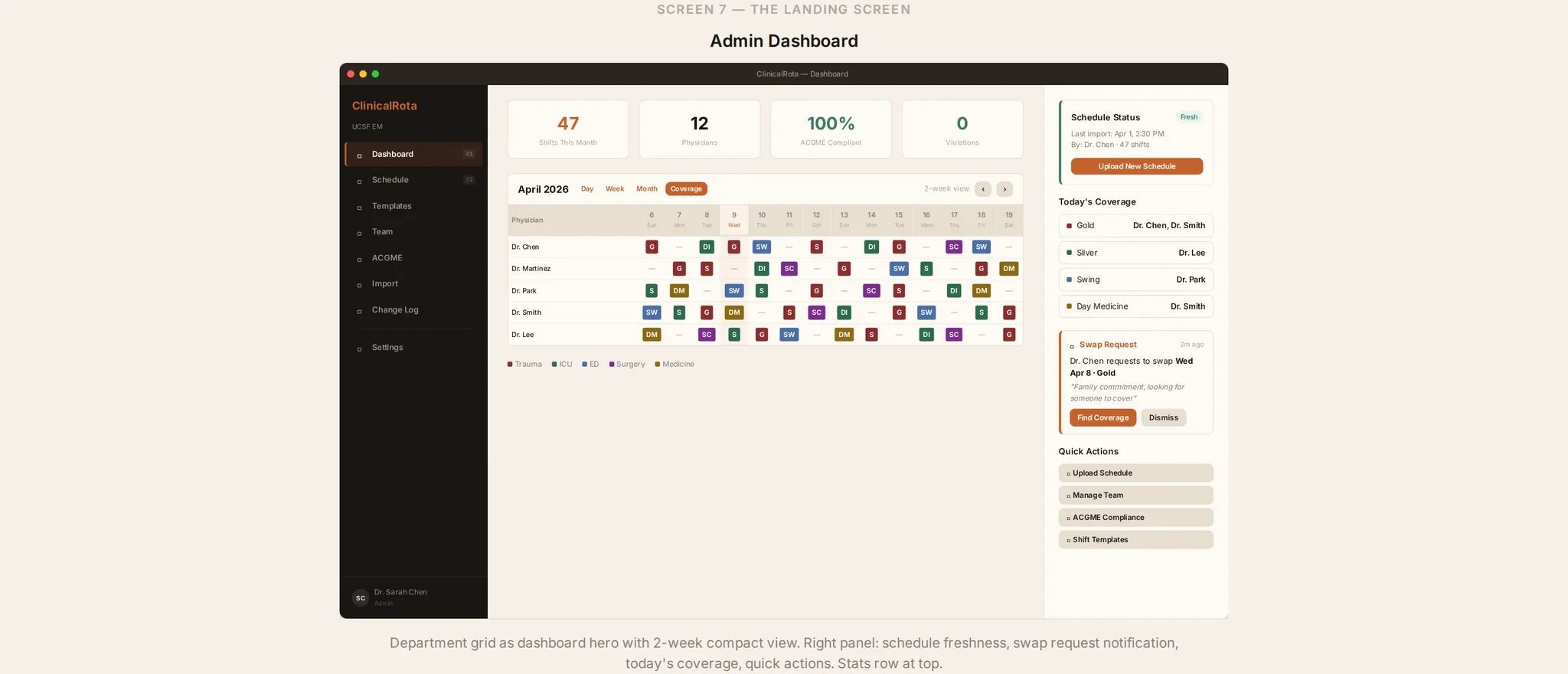
The Cost of Manual Scheduling
The cost of manual healthcare scheduling is real even when it never appears as a line item.
Read more →Burnout Is Also a Scheduling Problem
Burnout is not only about hours. It is also about whether the hard parts of work feel shared.
Read more →What AI Can and Can't Do for Hospital Scheduling
AI may help with healthcare scheduling, but only on the parts that are actually computational. The hard human parts still need judgment.
Read more →Why Scheduling Software Feels So Old
Scheduling software is worse than it should be. Clinical Rota exists to learn which part is actually broken.
Read more →